
Fiat Elpis · Macro note 01
Gold and Fed rate-hike odds: why September may be underpriced
Treasury buybacks failed to hold long yields down. Gold stayed firm. Oil remains the inflation risk. Together, those markets are testing whether the Fed can keep waiting.
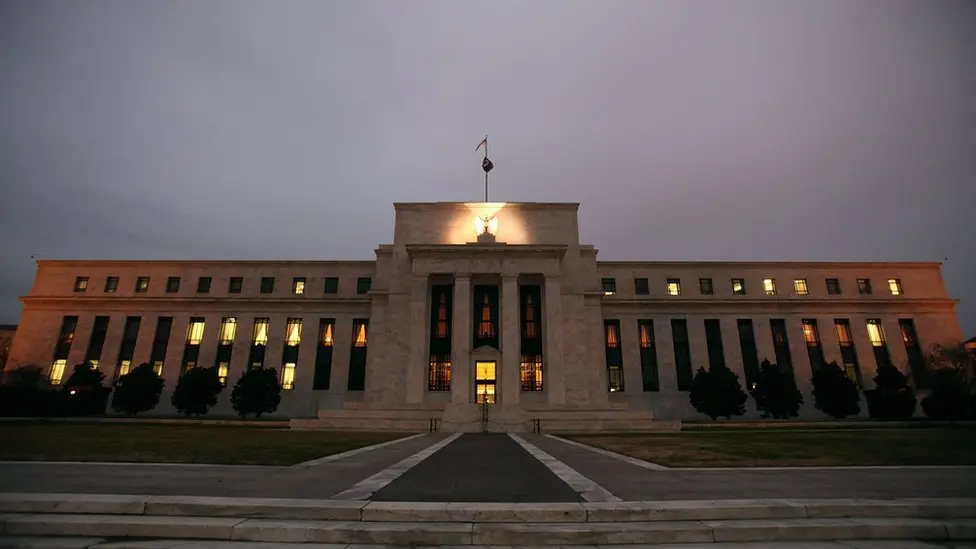
The Federal Reserve, Washington, D.C. · Fiat Elpis archive
My base case is that the probability of a September Federal Reserve hike is higher than the roughly one-in-three odds markets assigned in mid-August. The important change is not a single inflation print. It is that attempts to contain the long end of the Treasury curve are no longer buying much time.
01 · The information delta
The intervention worked for hours, not weeks
On 19 August, the U.S. Treasury surprised markets by doubling the size of its long-maturity bond buybacks to as much as $4 billion per operation. The mechanical aim was straightforward: remove some duration from the market, support bond prices and ease pressure on long-term borrowing costs.
By the next day, the 10-year Treasury yield was back near 4.69%—roughly where it stood before the announcement. The initial rally had been erased.
“There’s nothing left but to hike.”
The original Fiat Elpis market note on X
That sentence is deliberately sharper than the full argument. Treasury buybacks are not formal yield-curve control, and they are not Federal Reserve quantitative easing. But when fiscal authorities actively try to compress the term premium and yields immediately rebound, the market is sending a credibility signal: debt supply and inflation risk cannot be managed by optics alone.
02 · Four cross-asset signals
Read the reaction function, not one market in isolation
The term premium is resisting policy pressure
A buyback can improve liquidity and reduce the amount of duration dealers must absorb. It cannot, by itself, resolve concerns about fiscal supply, AI-related borrowing or persistent inflation. A 10-year yield that snaps back after direct support says investors still demand compensation to own duration.
Gold is trading like a credibility hedge
Higher real yields would normally be a headwind for a non-yielding asset. Gold holding near $4,400 while long rates rise suggests that fiscal and institutional risk is offsetting the discount-rate effect. The World Gold Council likewise highlighted Treasury-market fragility as supportive even with higher yields.
The inflation shock has not disappeared
Brent crude was near $94 on 20 August, versus roughly $72 before the war. July CPI was softer—up 0.1% month on month—but energy prices were still 14.7% above a year earlier. The July data therefore describes a brief window in a moving shock, not necessarily the inflation impulse the Fed will face in September.
The committee already has a hawkish bloc
The July FOMC held the policy range at 3.50%–3.75%, but three members dissented in favor of a 25-basis-point hike. The hurdle is not moving from zero support to a majority; it is persuading enough members that another hold would cost more credibility than a hike.
The paradox
A short-rate hike could be the cleanest way to bring long rates down. If tighter policy restores confidence in the Fed’s inflation response, the long end may rally even as the front end reprices higher.03 · What may be mispriced
A one-in-three hike probability looks too low
Fed funds futures implied roughly a 35% chance of a September hike in mid-August, down from about 55% before the softer CPI and PPI reports. Those odds are a market price, not an economic forecast, and they can move sharply before the 15–16 September meeting.
The market is correctly reading the cooling labor data and the benign July core CPI print. The BLS reported core inflation of 0.2% month on month and 2.5% year on year. But the pricing appears to underweight three feedback loops:
- Oil into inflation expectations. A renewed energy impulse can reach surveys and wage demands before it fully enters core CPI.
- Long yields into credibility. A disorderly long end tightens financial conditions while advertising doubt about the policy regime.
- Treasury action into the Fed’s burden. The more visibly the fiscal side leans against higher yields, the more the central bank must demonstrate that its inflation mandate is independent.
This is why gold matters. It is not predicting the next FOMC vote on its own. It is showing that the market does not view the current mix of buybacks, verbal guidance and patience as fully credible.
04 · What would change my mind
A thesis needs observable failure conditions
The hike view weakens materially if the next several signals line up in the opposite direction:
- Oil retraces durably toward pre-war levels, reducing the forward inflation impulse.
- Long Treasury yields fall and remain lower without fresh official support.
- August CPI confirms continued disinflation while labor data weakens further.
- Chair Kevin Warsh provides a clear, credible hold framework at Jackson Hole that markets accept.
- Gold breaks lower alongside stable inflation expectations, suggesting the credibility premium is fading.
Until then, I think the balance of risks is asymmetric: a hold is the consensus outcome, but the cross-asset cost of another credibility miss is rising.
Bottom line
Gold is not the trade signal. It is the warning light.
The clearest message is coming from the combination of markets: Treasury support that did not stick, oil that keeps the inflation tail alive, gold that refuses to behave like a simple real-yield asset, and a divided Fed with an existing hawkish bloc.
My conclusion is not that a September hike is certain. It is that roughly 35% did not pay enough for the probability that the Fed will choose credibility over comfort.
Sources & method
Primary data first, live prices time-stamped
- Federal Reserve — 29 July 2026 FOMC statement
- U.S. Bureau of Labor Statistics — July 2026 CPI
- U.S. Treasury — August 2026 borrowing advisory minutes
- CME FedWatch — futures-implied policy probabilities
- Associated Press — 20 August 2026 Treasury buybacks, yields and oil snapshot
- World Gold Council — Treasury fragility and gold
Market levels and policy probabilities are snapshots and may change after publication. This note separates reported facts from the author’s interpretation.